This guide is for small manufacturers, food brands, contract packers and anyone moving from hand packing to a machine. It explains the main types, the questions to settle before you buy, how to judge a used machine, and what to send a supplier for an accurate quote.
Types of packing machines and what each is for
The right type depends on your product and on the pack your customer expects.
Pouch Packing Machine
A pouch packing machine forms a pouch from a roll of film, fills it and seals it in one cycle. It suits loose products sold in flexible packs: spices, tea, snacks, grains, powders, and liquids such as oil or shampoo in sachets. The filling system matters as much as the machine itself. Powders need an auger filler, free-flowing granules need a cup or weigher, and liquids need a pump.
Bottle Filling Machine
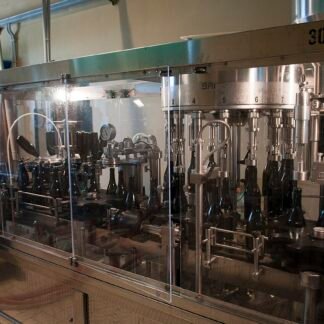
A bottle filling machine puts a measured amount of liquid into bottles, jars or cans. It is used for water, juice, edible oil, sauces, chemicals and cosmetics. The filling method changes with the liquid, because thin, thick and foaming liquids each behave differently. Capping and labelling can be built in or separate. Choose it when your product goes into a rigid container rather than a film pack.
Shrink Wrap Machine
A shrink wrap machine wraps a product, or a group of products, in film and then shrinks the film tight with heat. It is common for bundling bottles, wrapping cartons and boxes, and giving retail packs a clean, tamper-evident cover. This is secondary packing. Pick it when the product is already packed and needs to be grouped or protected.
Blister Packing Machine
A blister packing machine forms cavities in a plastic or foil sheet, places the product in them and seals a backing layer on top. Tablets and capsules are the best-known use, but small hardware and consumer items are packed this way too. The forming tools are made for one product shape, so every new shape needs its own change parts. Pick it when each unit must be held separately and protected until use.
Vacuum Packing Machine
A vacuum packing machine draws the air out of a pack before sealing it. Food businesses use it for meat, fish, cheese, dry fruits, coffee and rice. Engineering firms use it to keep metal parts and electronics away from moisture. It is slower per pack than a pouch line, so choose it when longer shelf life or protection from air matters more than speed.
Pillow Pack (Flow Wrap) Machine
A pillow pack machine wraps solid items in a continuous tube of film, with one seal along the back and a crimped seal at each end. Biscuits, bars, soap, bakery items and small hardware kits are typical. It works best with solid pieces of a regular shape arriving at a steady rate. Loose powders and liquids belong on a pouch machine instead.
How to choose
Answer these questions before you compare models.
- Product: Is it a powder, granule, liquid, paste or solid piece? Is it sticky, dusty, oily or fragile?
- Pack: What pack style and sizes do you sell today, and which sizes might you add later?
- Output needed: How many packs do you need per shift now, and what do you expect once sales grow?
- Automation level: Manual, semi-automatic or fully automatic? More automation means higher output and fewer hands, but also a higher price and more setting-up.
- Power supply: Do you have single-phase or three-phase power? Many machines also need compressed air, which means a compressor.
- Space: Measure the floor area and the ceiling height. Leave room for the film roll, the operator and the outfeed.
- Budget: Include change parts, the first stock of packing material, spares, delivery and installation, not only the machine.
- Operator skill: Who will run it and change sizes? A simple machine your team can handle beats an advanced one that waits for a technician.
New or used
A new machine makes sense when the pack is the face of your brand, when you run long shifts, or when you need the machine built around your exact product and pack size. New machines on MachineryInsider carry a 12-month warranty. Browse the new packing machines to see what is listed.
A used machine makes sense when your budget is tight, when you are testing a new product, or when you need a standard machine quickly. See the current used packing machines. The year and condition are confirmed on enquiry, and you can inspect the machine before paying. When you inspect, check these points:
- Running under load: See it run with real film and real product, not empty.
- Wear parts: Look at sealing jaws, heaters, cutting blades, belts, bearings and filler parts.
- Electricals: Check the control panel, sensors, temperature controllers and wiring for burnt or bypassed parts.
- Spares: Ask whether spares and change parts are still available for that model.
- Paperwork: Ask to see the seller’s original invoice and the manual. A tax invoice is issued with your purchase.
- Loans: Get it confirmed in writing that there is no loan or other claim on the machine.
If the new machine replaces an old one, you can sell your machine through the same marketplace.
What to send a supplier to get an accurate quote
- Product name and form, with a photo or a sample if possible
- Pack style, pack sizes and fill weights or volumes
- Packing material you use or plan to use
- Output you need per hour or per shift
- Automation level you want
- Power supply available, and whether you have compressed air
- New, used or either
- Delivery location
- Any extras, such as date coding, a conveyor or a check weigher
Send these details through the request a quote form. Prices are on request, and quotes are sent within 4 working hours.
Common mistakes to avoid
- Buying on the top speed printed in a brochure. The speed you get depends on your product and film.
- Choosing the machine first and the packing material later. The two must match.
- Ignoring changeover. If you run many sizes, slow changeovers eat into your output.
- Forgetting utilities such as three-phase power and compressed air.
- Buying a used machine without checking spares and ownership.
Frequently asked questions
Which packing machine is best for spices?
For ground spices, a pouch packing machine with an auger filler is the usual choice, because the auger handles fine, dusty powder. Whole spices flow more freely and can run on a cup or weigher filler.
What is the difference between a pouch packing machine and a flow wrap machine?
A pouch packing machine drops loose product into a pouch from above. A flow wrap machine wraps film around a solid item moving along a conveyor. Loose powder, granules and liquid go on a pouch machine. Single solid pieces go on a flow wrapper.
Is a used packing machine worth buying?
It can be, if it runs well under load, spares are available and the paperwork is clean.
Do packing machines need compressed air?
Many automatic and semi-automatic machines use air to drive sealing jaws, cutters and cylinders. Some small machines are fully mechanical or electric. Check this before buying, because a compressor adds to cost, space and power load.
Next steps
Start with your product and pack, then narrow the choice by output and budget. Compare new packing machines and used packing machines on MachineryInsider, or request a quote with the details above. Delivery is arranged worldwide. Remote installation support is included, and on-site installation is available on request.